
Blog

The ESI and the SDG Publishers Compact

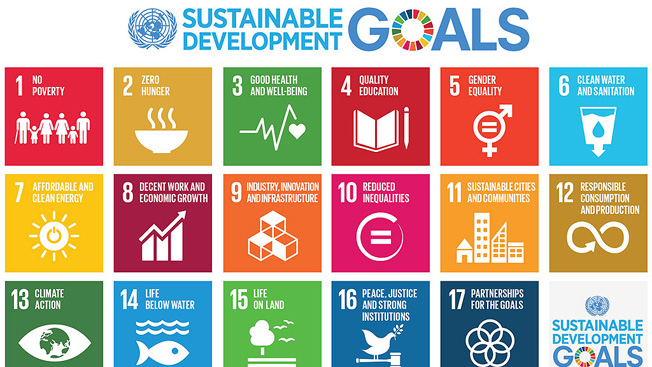
This July 2022, the European Scientific Institute, next to its several peer reviewed journals, among which is one of the largest interdisciplinary journals in Europe – the European Scientific Journal, ESJ, launched on its website a new platform specifically devoted to the publication of preprints.  Respecting the tradition of ESI, its Preprints platform is a multidisciplinary floor that allows all scientific manuscripts from all fields of research immediately available. Preprints are various types of research papers that have neither been subjected to peer-review nor published in a journal. In most cases, they can be viewed as completed or almost completed articles that are nonetheless ready to be shared with the international scientific community. All preprints undergo a short screening and if they pass the screening process are posted online in open access format under a Creative Commons Attribution 4.0 International (CC BY-NC-ND 4.0) license. Once online, preprints can be downloaded, shared, and cited. This gives maximum visibility to authors while ensuring their proper recognition for their work. With preprints, authors are in control of when their work appears, and if they want to change or add to the paper, they can submit a new version at any time. To ensure that citations are not affected, preprints assigned a DOI will have a new DOI issued for each version. An article published as preprint can be submitted, and after the peer review, can be published in any scientific journal. The ESI preprints platform is only the most recent project the ESI has designed to help reach the 17 sustainable development goals (SDG) set by the United Nations. Indeed, ESI as member of the SDG Publishers Compact has the SDGs at heart among its objectives. All ESI activities, its books, journals and its preprints platform are open to all researchers regardless of their gender, religion, race, geographical origin and nationality, and with its low publication fees is committed to SDG 5 (Gender Equality) and SDG 10 (Reduce Inequalities). ESI books, journals and preprints are all open access, and the preprints are a fast way to make researchers’ scientific works immediately available to the international scientific community, so contributing to SDG 4 (Quality Education), and SDG 10 (Reduce Inequalities). SDG 4 is also promoted through ESI several peer reviewed journals, and the many Conferences and forums organized in all parts of the world, which gather scholars with different backgrounds to share their scientific outcomes. Quality Education is also a main aim of the ESI Post-doctoral programs 1) Social Sciences and Humanities in a Post-Crisis Period; 2) Computer Sciences and Engineering; 3) Life and Natural Sciences in a Post-crisis Period; and 4) New Technologies and Law. The programs are in both English and Spanish, and to this aim, the ESI is partnered with many Universities all around Europe, which are involved with post-doc higher education of scholars all around the globe. Furthermore, the many partnerships of ESI with universities, research institutes and industries all over the world favor SDG 9 (Industry Innovation and Infrastructure) and 17 (Partnerships for the Goals). All of this work and all the effort in helping, as publisher, in developing the Goals set by the United Nations are possible only thanks to your joint commitment as people, researchers, scholars and academics all over the world, which I thank, and I hope that we will continue to work together for years to come.

Read More »
Blog

MIFS Conference

The 10 th Mediterranean Interdisciplinary Forum on Social Sciences and Humanities is over, and by now, all of us who attended are back at home and to our normal daily activities. After two difficult years for everyone, we have finally had the chance to all meet in person. I had never been to Tenerife before, but immediately after landing, I realized that I had arrived in a gorgeous island inhabited by welcoming and serene people. With its mild and gentle temperatures, Tenerife embraced all of us with days of sunshine and warm, calm waters. Tenerife, like all over Spain, offers a restful atmosphere on its beaches and in the hundreds of little restaurants and cafés located all around the island, which offer delicious food and refreshing wines. More than ever, I wanted to thank all of you who had the chance to share this wonderful experience with me, for your time and dedication. As a result of our participation, we were able to contribute interesting and inspiring presentations to advance social sciences and humanities, with the support of professionals and researchers around the world. Indeed, we came to La Laguna University from 13 different countries, scattered in all continents. In my opinion, a conference is not only a moment for presenting our scientific work, but it is also a moment for sharing, for listening, for exchanging among people who have common scientific interests. Furthermore, an international conference like the one we just attended in Tenerife, is also and foremost an opportunity for professional and personal relational enrichment. I warmly thank all the Colleagues and friends from the University of La Laguna for their professional and accurate organization, and for making all of us feel at home. Especially, I thank Jovan and Dejan for their tireless work and support to all of us, and mostly, for their smiles and friendship. I thank all of you once again, and I hope that you will continue to support ESI, its journals and all its activities.

Read More »
Blog

Book Review: The Craft of Scientific Writing (by Michael Alley)

I am writing this book review of Michael Alley’s The Craft of Scientific Writing[1]  (Springer) to alert readers of the ESI Blog of this excellent resource to improve your writing. Back in 1964, the Canadian philosopher Marshall McLuhan  gained fame with his seminal essay The Medium is the Message[2] which argued that the medium of a message was just as important as its content.  McLuhan presaged the rapid movement of information and data from the printed page to the electronic screen.  When I wrote my first scientific paper in 1972, all scientific articles were printed; now most are viewed electronically.  My first paper was composed on a typewriter and submitted to the journal editors in triplicate; now all submissions are electronic.  My first literature searches used the printed Index Medicus[3] ; fifty years later, I search PubMed[4] electronically. To its credit, the European Scientific Journal accepts submissions in English, French, and Spanish.  Nonetheless, the de facto twenty-first century language of science is British or American English.  Work that is widely read or widely cited is written in English.  Alley aims to improve the scientific writing of scientists and engineers who write in English. This is a very good book that I highly recommend. It is in its fourth edition and has been improved since its original publication in 1987.  Alley states in his preface that “as an engineer or scientist, your writing affects not only how much credit you receive for your work but also how much influence your work has. (page vii)”.  Alley eloquently concludes his preface with a “… wish that this book would make your scientific writing easy.  Unfortunately, scientific writing is hard work. The best scientific writers struggle with every paragraph, every sentence, every phrase.  They write, then rewrite, then rewrite again….(page ix)”. As editors and peer reviewers, we evaluate both the medium and the message of each submission.  The message of a submission reflects the quality of the research.  The medium reflects the quality of the scientific writing.  At the European Scientific Journal, we are committed to helping authors submit their best content combined with their best writing. This book is filled with sage advice, illustrated by wonderful writing examples (what to do and what not to do). I recommend reading this book cover to cover including the superb appendices on grammar, punctuation, word usage, and document formatting. A few of Alley’s recommendations deserve emphasis. Pick a descriptive title that engages the reader. The title should convey the main point of your article and give the reader a compelling reason to read it.  My very first paper published had a bland title “Studies on the mechanism of action of nerve growth factor”[5].  In retrospect, I could have used a more engaging title such as “Nerve growth factor stimulates the synthesis of microtubule protein”. Avoid unprofessional informality.  Many, otherwise good submissions, are marred by excessive informality.  The use of contractions such as it’s, shouldn’t, wouldn’t, don’t, couldn’t do not belong in formal scientific writing. Alley is opposed to the use of & for and, the use of vs. for versus, and the use of et al. for and others. Aim for both clarity and precision.  Scientific writing needs to be both precise and clear.  Precision means that you have conveyed your meaning without confusion or ambiguity.  Clarity means that the reader can grasp your meaning and intent without undo effort. Avoid unnecessary complexity.  Alley quotes Einstein who wrote “In scientific writing, keep things as simple as possible, yet no simpler”[6].  In general, the complexity of writing increases with the number of words in a sentence and the length of the words used.  Complexity can be reduced by using smaller words, avoiding jargon, avoiding indecipherable abbreviations, and writing shorter sentences.  Reading level is calculated by the Flesch Kincaid metric which considers word length and sentence length.  Alley recommends aiming for a reading level of 10-13.  Microsoft Word will automatically calculate the Flesch Kincaid reading level[7].  Word calculates the reading level of this book review as 10. Avoid ambiguity.  Ambiguity occurs when competing and incompatible interpretations of your writing is possible.  Alley gives an example of an ambiguous sentence such as “The proposed schedule is discussed below for the next four years.”  It is unclear whether the schedule is for four years, or whether the discussion is for four years. Aesthetics matter.  Alley believes that good scientific writing  is precise, concise, and clear.  But it is also beautiful.  He finds aesthetically unpleasing writing distasteful.  He especially dislikes the use of TITLES OR SUBTITLES IN ALL CAPITALS hard to read and ugly.  He does not like the use of excessive abbreviations with periods.  He prefers CNS to C.N.S. (central nervous system), AMU to A.M.U. (atomic mass unit), and ICU to I.C.U. (intensive care unit).  He is always looking for more aesthetically pleasing phrasing such as arranged for made the arrangement for, decided for made the decision, and measured for made the measurement of. Alley has useful lessons on moving from the familiar to the complex, optimal organization of content, methods for providing proper emphasis, and  tips for using your writing time efficiently. Finally, Alley concludes by distinguishing between the process of revising and the process of finishing a document. Revising is the iterative process of improving the document through repetitive edits to improve clarity, precision, and organization. Finishing is the final step of ensuring that the document is free of errors in grammar, spelling, and punctuation just prior to submission. On personal note, I found this book extremely helpful.  I recommend it without reservation.  Some non-primary English speaking writers may find it too difficult to grasp.  Although I engage in extensive revising and finishing of my own documents, I am always surprised to discover that some errors slip through my review process at the time of submission. Like Alley, I believe that reading aloud a document is important to catching errors. For those of you with Microsoft Word, this process can be automated with the Read Aloud option[8]. 

Read More »
Blog

On Inclusive Language

During these past years, I have had the honor to serve as a Specialty Chief Editor for the Humanities section of the European Scientific Journal (ESJ), and more recently, I have also been included in the editorial staff of the International Journal of Linguistics, Literature and Culture (LLC) as Associate Editor. In the past years, I have also reviewed an enormous amount of articles for many different journals that publish diverse themes and subjects around the world. All of these extremely exciting activities have given me the possibility to come across and read a large number of papers. I must say, with profound sadness that I still see much too much non-inclusive language. Coherently, I felt the need to use my blog to further stress the importance of being particularly aware of the language we use, especially in an academic context like the one we live in, in that it should serve as an example for all others. What is inclusive language? Any language that treats people unfairly, insults, or excludes a person or group of persons is non-inclusive language (from https://www.vercidagroup.com/). On the contrary, inclusive language demonstrates awareness of the vast diversity of people in the world. Inclusive expressions don’t presume to know someone’s gender or imply biased or prejudiced ideas. Whether that’s in relation to ethnicity, sexual orientation, gender identity, ability, or any other personal characteristic. Using inclusive language offers respect and belonging to all people — so it’s about more than just avoiding offensive language (from https://medium.com/diversity-together). What can we do? We should all know and remember that paper selection and review process have changed dramatically during the past years. In order for us to be effective writers/reviewers and diversity practitioners, we need to stay abreast of new words, concepts, and trends that impact our work, and we should learn to use the right language in every situation. The way we live, work, and feel has changed during these past years, and so has language. Commonplace expressions of the past may once have been acceptable but in the modern day are offensive.  When we write, sometimes we need to address gender, culture, religion, race, and many many other themes that might represent pitfalls in terms of inclusive language use. However, just like every language, inclusive language is structured on rules and frameworks that we can learn and apply when we write, review/revise a paper. So, please let’s always Put the accent on the person Use gender neutral grammar and statements Avoid phrases with racist, underrepresented, ethnic or cultural offensive meaning Avoid mental health language and derogatory terms Avoid terms or phrases related to disability or diseases in general that might include non-respectful language Use religion neutral statements with all their correlates.   More importantly, let’s learn to think ‘inclusively’ before we write, review/revise, speak. Let’s always learn to consider that when we write, review/revise, speak, we might be negatively connoting a person’s diversity. Franca Daniele

Read More »
doctor-vaccinating
Blog

The COVID Vaccine – What should you expect?

COVID-19 has now been around for a little over a year, and over the past few months, vaccines have been rolling out. There are several two dose vaccines that have been approved for emergency use for the pandemic, as well as several more that should be approved soon, requiring only a single dose (Pfizer, 2021). There has been a fair amount of speculation about the vaccine and what happens to the body once one receives it…Chances are that if you are over age 16, the vaccine will be in your near future so, and you may be wondering. So, here is my account from a nursing perspective. When I arrived at the clinic for my vaccine, they asked me a fair number of screening questions. The typical allergies, name, date of birth etc..- but then they asked more specific questions that I did not expect as part of this screening and feel they are fairly important to pass on: Any other vaccines in the last two weeks? Have you had a positive diagnosis of COVID-19 or received monoclonal antibody therapy? Botox or fillers in the last two weeks? (CDC, 2021,a) So, why are they asking those questions? I had to find out. For previous vaccines in the last two weeks- they want to know so that The current recommendation is that people do not receive the vaccine within two weeks of receiving another type of vaccine. There has not been any research done to identify the outcomes of this. The CDC recommends at this time to avoid. (CDC, 2021,a) Previous COVID Dx: Antibodies stay for approximately 90 days, so it is recommended that they delay getting the vaccine, until more doses are available. (National Center for Immunization and Respiratory Diseases, 2021). Botox/Filler: “In the Moderna mRNA-1273 trial, three reactions were possibly related to dermal fillers out of 15,184 vaccine recipients. It is unknown how many subjects    in the trial had previous treatment with dermal fillers.” (Avram, et al, 2021) The first dose of the vaccine was pretty benign. The injection is given in the upper arm- the deltoid muscle. Because the injection needs to be given in the muscle, a fairly large gauge needle is used- typically between a 22 and a 25, with needle sizes the smaller the number the larger the needle bore (Nakajima et al, 2017). Intramuscular injections typically cause a fair amount of pain afterwards- and this one was no different. Similar to a tetanus shot. Due to the type of vaccine, it needs to be delivered into the muscle. Once the injection is given, they ask for you to wait for 15 minutes for observation period. During this time they are watching you for any type of allergic reaction- trouble breathing, dizziness, itchy tongue etc- this period is extended to 30 minutes if you have had any type of anaphaylaxis in the past (Pfizer, 2021). For me, about 5 minutes after the vaccine I got very anxious- I did some pranayama breathing and it settled down before my 15 minutes was up. Over the next few weeks- I spoke to a dozen or so other people that felt anxious after the vaccine too. I had typical arm soreness that extended down to my wrist the next day- nothing that acetaminophen did not resolve. I also woke up feeling pretty achy- but this resolves as soon as I went for my morning walk…That was it, no other effects. The second dose is given a minimum of 21- 28 days after the first dose- but be sure to check what your wait time is as it varies depending on the brand. It is also very important to make sure that you receive the same brand each time as there has not been any research to determine the effects of two different brands of vaccine (Pfizer, 2021). Again it is administered into the deltoid muscle in the upper arm. I used the opposite arm from the last time- and hardly felt it go in. This time my 15 minutes passed very quickly without incident. Later that evening- about 5 hours after the injection I started to feel a little bit nauseous, but not too bad. That night I had difficulty sleeping, I was very achy, and my fingers swelled enough that I had to remove my wedding rings. The next day I continued to be achy, I was pretty tired, with a mild temperature, and my arm was very sore. All of this was expected after the second dose. After the second dose, they tell you to expect to feel flu-like symptoms (CDC, 2021c), and they were correct. I followed the guidelines and drank plenty of water, ate chicken noodle soup, and stayed on the couch and watched NetFlix- Ok, the last one was not in the guidelines, but it helped me to pass the day, and actually enjoy the break from work! I went to bed early that night and when I woke up the next day, I felt fine. So, a basic timeline, 5 hours after the injection I had nausea, at 10 hours: I started to get achy and my fingers swelled-this continued for about 12 hours, I had a good sleep and felt better. All in all the experience was not too bad, I would definitely do it again, and I as a nurse, I have no reservations that I took the vaccine. If a day on the couch with mild flu-like symptoms was the worst I felt during the pandemic- I consider myself very lucky. It will be interesting to watch the new trials as more medications and vaccines are created to help stop this pandemic. Here is the website to check them out yourself! www.clinicaltrials.gov. References: Avram, M., Bertucci, V., Cox, S., Jones, D., & Mariwalla, K. (2020, December 28). Guidance 2. Regarding SARS-CoV-2 mRNA Vaccine Side Effects in Dermal   Filler Patients. https://www.asds.net/Portals/0/PDF/secure/ASDS-SARS-CoV-2-Vaccine-Guidance.pdf CDC. (2021). Prevaccination checklist for COVID-19 vaccines. https://www.cdc.gov/vaccines/covid-19/downloads/pre-vaccination-screening-form.pdf CDC. (2021). Pfizer-BioNTech COVID-19 vaccine standing orders for

Read More »